
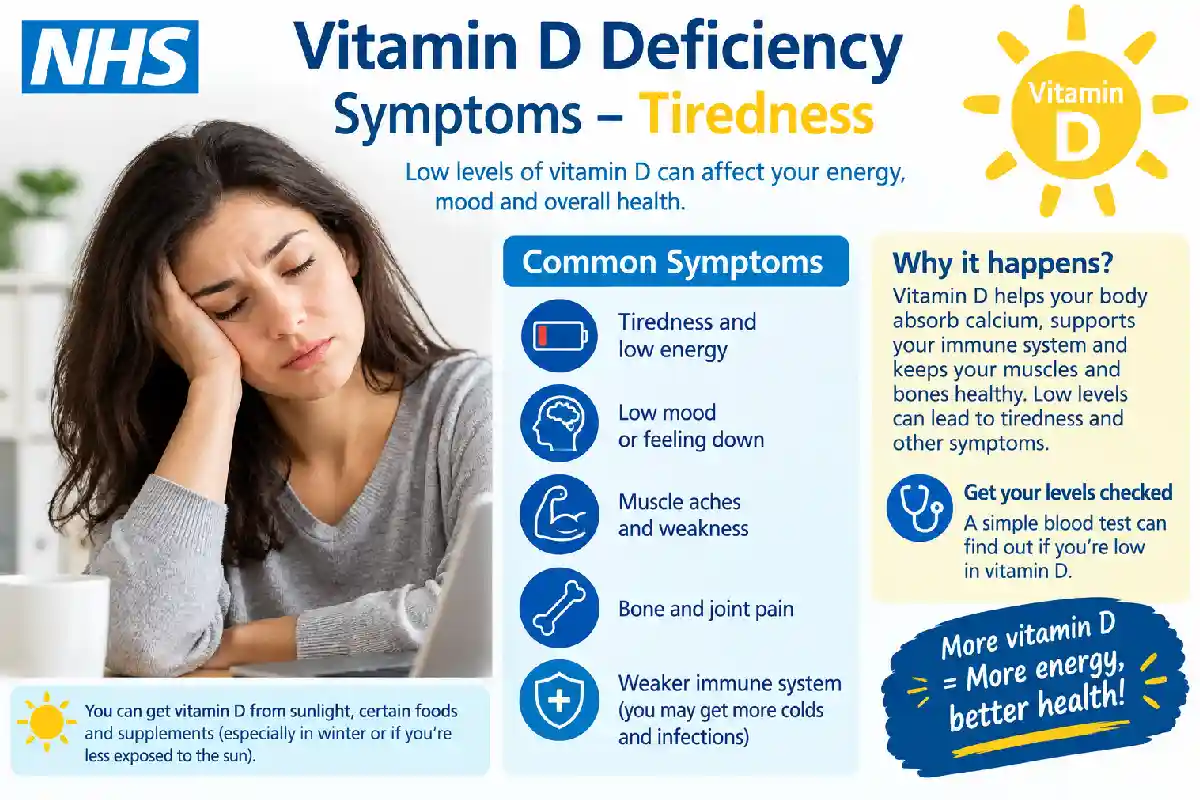
In the case of vitamin D deficiency in the NHS, symptoms can range from mild to visible, or even not visible at all. Vitamin D is required for healthy bones, muscles, and other body processes. If vitamin D deficiency goes untreated, one can experience such symptoms as fatigue, weak muscles, pain in muscles or bones, and frequent illnesses. This information will prove useful when considering whether it would be prudent to disclose the symptoms you have to a health care provider.
It should be noted that feeling tired doesn’t necessarily mean you have vitamin D deficiency. There are many potential reasons for fatigue, such as insufficient sleep, stress, anemia, thyroid problems, infections, etc.
What Are the NHS Vitamin D Deficiency Symptoms?
Vitamin D deficiency sometimes doesn’t lead to any symptoms. Most patients with low levels of vitamin D have no complaints at all. In the case of symptoms, they include:
| Possible symptom | How it may feel |
| Tiredness | Tenacious lack of energy or feeling remarkably fatigued |
| General aches | Mild, mysterious muscle or body aches |
| Jawbone pain | Pain or tenderness in the bones |
| Muscle weakness | Difficulty with activities such as climbing staircases |
| Muscle spasms | Cramps, twitching, or spasms in more severe cases |
| Reduced mobility | Trouble walking or rising from a chair |
| Fractures | Increased risk of broken or weakened bones in plain or prolonged deficiency |
Is Tiredness a Symptom of Vitamin D Deficiency?
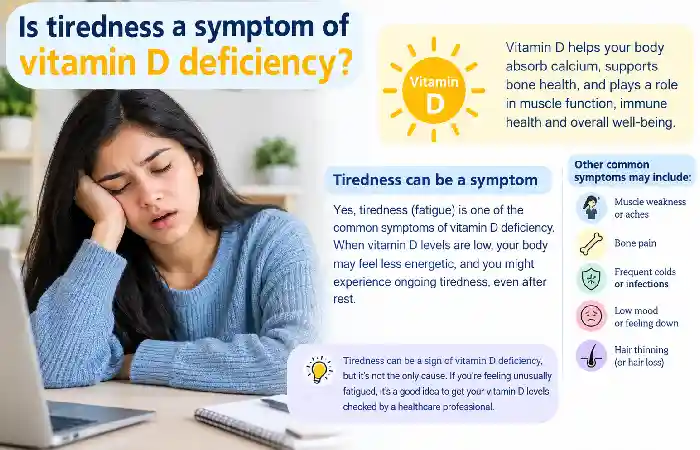
Yes, tiredness is one of the symptoms of low vitamin D, but it is not regarded as a specific symptom.
Namely, according to some information from the NHS concerning patients, fatigue is regarded as one of the symptoms of low vitamin D. However, there are other causes that might lead to a feeling of tiredness.
The following diseases are among the possible causes of fatigue:
- Lack of good-quality sleep
- Insomnia
- Stress
- Depression
- Malnutrition
- Anaemia
- Diabetes
- Thyroid diseases
- Some infections
- Some medications
- Sleep apnoea
- ME/CFS
What Does Vitamin D Do in the Body?
Vitamin D helps the body absorb calcium and phosphorus, which are required for the development of healthy bones, teeth and muscles. There are several functions performed by vitamin D within the body:
Healthy bones: Keeps bones healthy.
Calcium absorption: Helps in absorbing calcium within the body.
Muscles: Helps in keeping muscles healthy.
Immunity: Helps in the functioning of the immune system.
Vitamin D Deficiency Symptoms in Adults
People with mild vitamin D deficiency may experience no symptoms at all. However, if they do have symptoms, those will most likely be general and vague.
The symptoms can be as follows:
- Fatigue
You might be very tired, weak, and find it hard to do normal things.
Fatigue can be caused by many reasons, but this doesn’t necessarily mean that you are lacking vitamin D.
- Weakness in muscles or muscle pain
Lack of vitamin D results in weakening of muscles and pain. In case of severe vitamin D deficiency, you might have difficulties in such activities as walking upstairs.
- Bone pain
Even more serious deficiency may result in bone pain or tenderness, as described by the NHS guidance on osteomalacia.
- Muscle cramps or twitching
Severe vitamin D deficiency may associate with muscle cramps, twitching or spasms, especially in case of calcium deficiency as well.
- Increased risk of fractures
Vitamin D deficiency over the course of time may weaken bones, which according to the NHS guidance may increase the risk of falls and fractures in older people.
Who Is at Risk of Developing Vitamin D Deficiency?
Some population groups have higher risks of developing vitamin D deficiency.
Such groups include:
- people spending a lot of time indoors
- people lacking sufficient sun exposure
- people with darker skin
- people over 65 years of age
- people covering most parts of their bodies when they are outside
- people with digestive or absorption problems
- people who have undergone weight-loss surgery
- people with liver or kidney diseases
- people on medications affecting vitamin D metabolism
- pregnant or breastfeeding women
According to the NHS information, limited sun exposure, darker skin, older age, and certain health issues are among the factors increasing the risk of low vitamin D levels.
How Is Vitamin D Deficiency Diagnosed?
Fatigue does not necessarily suggest the need for a test for vitamin D.
Vitamin D testing is not recommended for everyone. This is usually done only if symptoms and risk factors suggest a possibility of a deficiency.
The test, in such a case, involves checking the level of 25-hydroxyvitamin D. The patient may also have other tests, depending on their symptoms.
In case of fatigue, further investigation of other reasons is possible. These might include, depending on the symptoms, anemia, diabetes, and thyroid disorders.
What to Do if Deficiency Is Suspected?
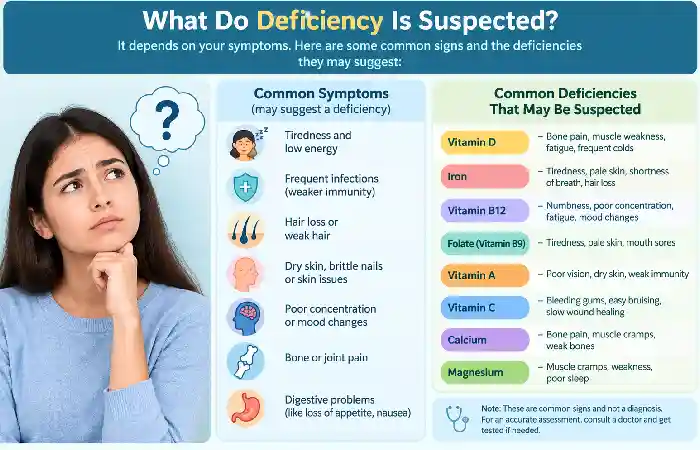
In case of fatigue and deficiency of vitamin D, you should contact your GP or pharmacist and avoid taking supplements with high doses.
The healthcare professional will be able to determine:
- Symptoms
- History of your health
- Risk factors
- Medications used
- The need for a test
- The need for supplements
In the event of a deficiency, the doctor may recommend taking a high-dose therapy. NHS recommends a high-dose loading therapy in case of a severe deficiency.
Vitamin D from foods
Vitamin D includes sunlight and a healthy diet, as well as supplements when necessary.
Foods that are rich in vitamin D include:
| Food | Vitamin D contribution |
| Oily fish | One of the better natural food sources |
| Egg yolks | Contains smaller amounts |
| Red meat | Contains some vitamin D |
| Liver | Contains vitamin D but should not be consumed excessively |
| Fortified foods | Some breakfast cereals and spreads are fortified. |
NHS also recognizes oily fish like salmon, sardines, herring and mackerel as sources of vitamin D.
Does Taking a Vitamin D Supplement Help in Reducing Tiredness?
The reason for tiredness being due to vitamin D deficiency can rectifies with vitamin D supplementation. However, there can be many causes of tiredness, and vitamin D supplementation alone won’t solve the issue of tiredness when the deficiency of vitamin D is not identified.
Correction of vitamin D deficiency: The problem of tiredness can correct through the process of correcting the deficiency of vitamin D.
Energy sources: Vitamin D plays an important role in the proper functioning of muscles and the body.
Blood test: A blood test may conduct by the health care provider to measure the amount of vitamin D.
Dosage: The recommend dosage of vitamin D supplements must taken, not high doses.
Causes of tiredness: Regular tiredness can also due to lack of proper sleep, stress, anemia, and other reasons.
When To Visit Your GP With Fatigue?
If:
- You suffer from fatigue for several weeks and cannot understand the reason for this condition
- You have problems with doing daily activities because of your fatigue
- Unexplained weight loss
- Mood swings
- Weak muscles
- Pain in bones and muscles
- Difficulty breathing or palpitations
- Other symptoms
You need to see a GP regarding your condition.
Conclusion
Knowing what the NHS defines as the symptoms of vitamin D deficiency can assist you in knowing if your body is experiencing any problems with the amount of vitamin D it needs. The symptoms include tire, muscle weakness, muscle/bone pain, and getting sick frequently, but these symptoms may occur due to many other reasons. You should discuss your situation with your doctor in order to know if testing or treatment is necessary for you.
