
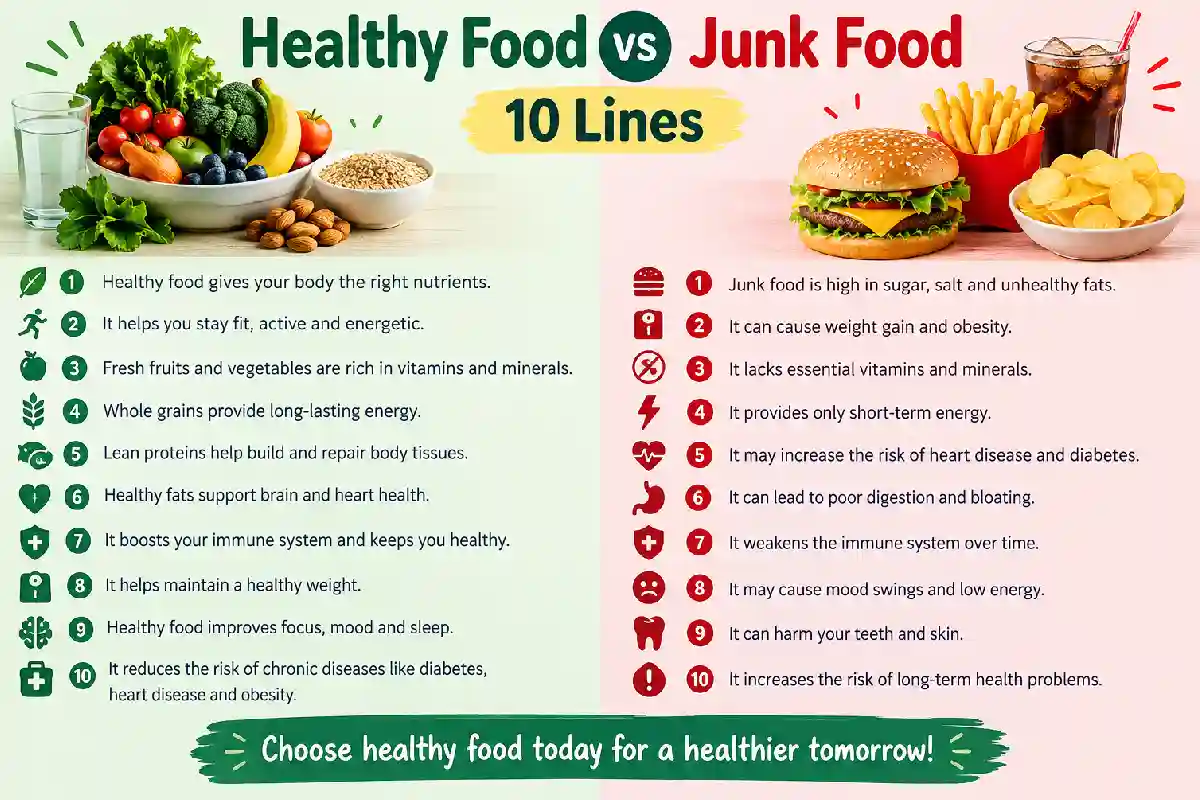
Understanding the difference between healthy food and junk food can help you make better everyday food choices. Healthy foods generally provide important nutrients such as protein, fiber, vitamins, minerals, and healthy fats, while many highly processed foods can be high in added sugars, sodium, and unhealthy fats.
Healthy Food vs Junk Food: 10 Lines
Ten Lines on Healthy Food vs Junk Foods
- Healthy food items can include fruits, vegetables, whole grains, legumes, nuts, seeds, and healthy proteins.
- Junk food refers to foods and drinks that contain a high content of calories, sugar, salt, or fats with less nutritional content.
- The nutrients in healthy food are responsible for our growth, energy, and a healthy life.
- Junk foods like soda, fried foods, candies, and packaged foods should not be a part of your daily routine.
- Healthy food contains a high content of fiber, which not only helps with better digestion but also keeps you full.
- Try to avoid foods that have a high content of added sugar, sodium, saturated fats, and processed foods.
- Instead of taking sodas and other beverages that contain added sugar and preservatives, go for whole fruits.
- Although healthy foods consist of foods that are not processed, this doesn’t mean that there are no processed foods available in the category of healthy foods, like frozen or canned foods without sugar and sodium.
- You can enrich your nutrition through substituting some of the processed snacks with fruits, vegetables, whole grains, nuts, or other nutrient-rich foods.
- Healthy food is always the healthier choice for you; however, it should be consumed only moderately in your balanced diet regimen.
What Is Healthy Food?
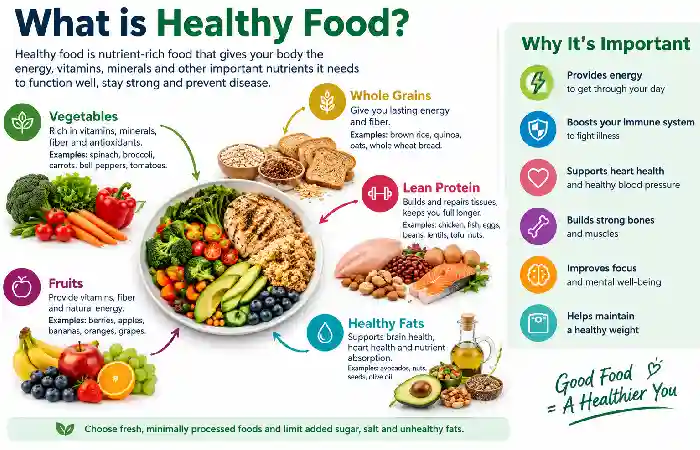
Healthy food is food that contains valuable nutrients in a balanced diet regimen. Healthy foods consist of such products as fresh fruits, vegetables, whole grains, legumes, beans, lentils, nuts, seeds, eggs, fish, and other protein sources.
According to WHO recommendations, there should be consumption of different kinds of food without concentrating too much on one certain group. The daily intake of fruits and vegetables and enough dietary fiber should be 400 g for people who are older than 10 years old.
Some examples of healthy foods include:
- Apples, bananas, oranges, and berries;
- Spinach, carrots, broccoli, and tomatoes;
- Oats and other whole grains;
- Brown rice and other whole grain foods;
- Beans and lentils;
- Nuts and seeds;
- Eggs;
- Fish;
- Unsweetened yogurt;
- Vegetables cooked in moderate amounts in healthy oils.
What Is Junk Food?
“Junk food” is more of a common name than the scientific name for foods that fall into this category. The name “junk foods” is used in respect of those foods which contain many calories but lack any nutrition. They may also contain added amounts of sugars, salts, fats, and carbohydrates.
Some examples of junk foods are:
- Candies
- Soda
- Some ready-to-eat snacks
- Some chips
- Some deep-fried snacks
- Some cakes/pastries
- Some cookies
- Some fast food meals
- Some sugary desserts
- Some ready-to-eat snacks
Healthy Food vs Junk Food: Quick Comparison
| Healthy Food | Junk Food |
| Rich in essential nutrients | Often nutrient-poor |
| Usually provides more fiber. | Often low in fiber |
| Includes fruits and vegetables | Often includes highly processed ingredients. |
| Can provide quality protein | May provide fewer beneficial nutrients |
| Usually lower in added sugar | Often high in added sugar |
| Can support a balanced diet | Should generally be limited |
| Examples: fruits, vegetables, oats, beans | Examples: candy, sugary drinks, fried snacks |
Why Is Healthy Food Important?
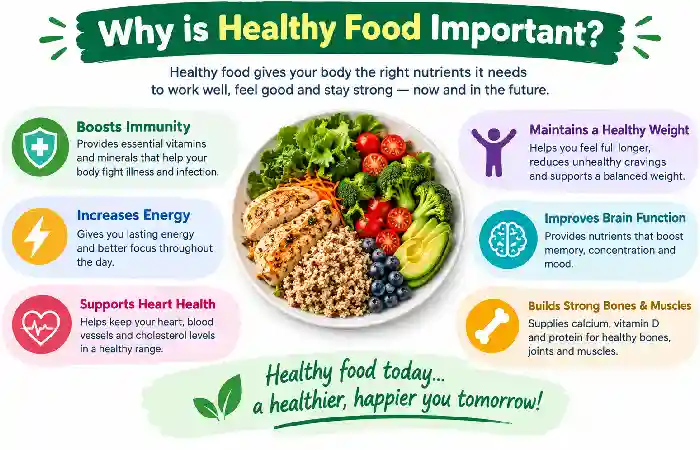
An ideal diet should have all the nutrients that the body requires. The body must be provided with diverse types of food so that it can get all the required vitamins and minerals.
The components of good nutrition as per WHO include adequacy, balance, moderation, and diversity. Different types of foods that are unprocessed or minimally processed should be eaten. Unhealthy fat-, sugar-, and sodium-rich foods should be consumed in low quantities.
The role of fruits and vegetables in diet is that they are very beneficial. These foods are rich in vitamins, minerals, fiber, and other nutrients. Taking such foods ensures a healthy diet.
Healthy Food Choices
The following activities may help one to choose healthy food:
- Eating whole fruits rather than juice.
- Eating different vegetables in their diet.
- Eating whole grains like oats and brown rice.
- Eating legumes including beans, lentils, nuts, seeds, eggs, fish, and other protein foods.
- Drinking water rather than sweetened beverages.
- Checking the contents of added sugar and sodium in food.
- Avoidance of highly processed foods.
Such actions will help one eat healthy food without being on strict diets.
Frequently Asked Questions
What are 10 differences between healthy and junk foods?
Healthy foods provide essential nutrients like vitamins, minerals, proteins, fiber, and the like, whereas junk foods have added sugars, fats, sodium, or calories.
Which one among these two is a better choice, healthy or junk foods?
Of course, healthy foods are better than junk foods because healthy foods provide you with essential nutrients that will help you have a balanced diet. High-calorie, high-sugar, and other unhealthy foods should be consumed occasionally.
Are all kinds of processed foods considered to be junk foods?
Absolutely not. Processed foods are not always unhealthy foods. There are minimally processed foods that are still healthy, like frozen vegetables, canned beans, etc., as long as these foods do not have added sugars or sodium.
Is it alright to consume junk foods occasionally?
Yes, of course it is.
Conclusion
One major distinction between healthy food and junk food is the nutritional value of both kinds of food. Nutritious food consists of fruits, vegetables, whole grains, beans, proteins, and many more, while junk food is often very high in sugar content, sodium, or calories.
If you want to maintain a healthy diet on a daily basis, it is important to follow a nutritious diet.
