
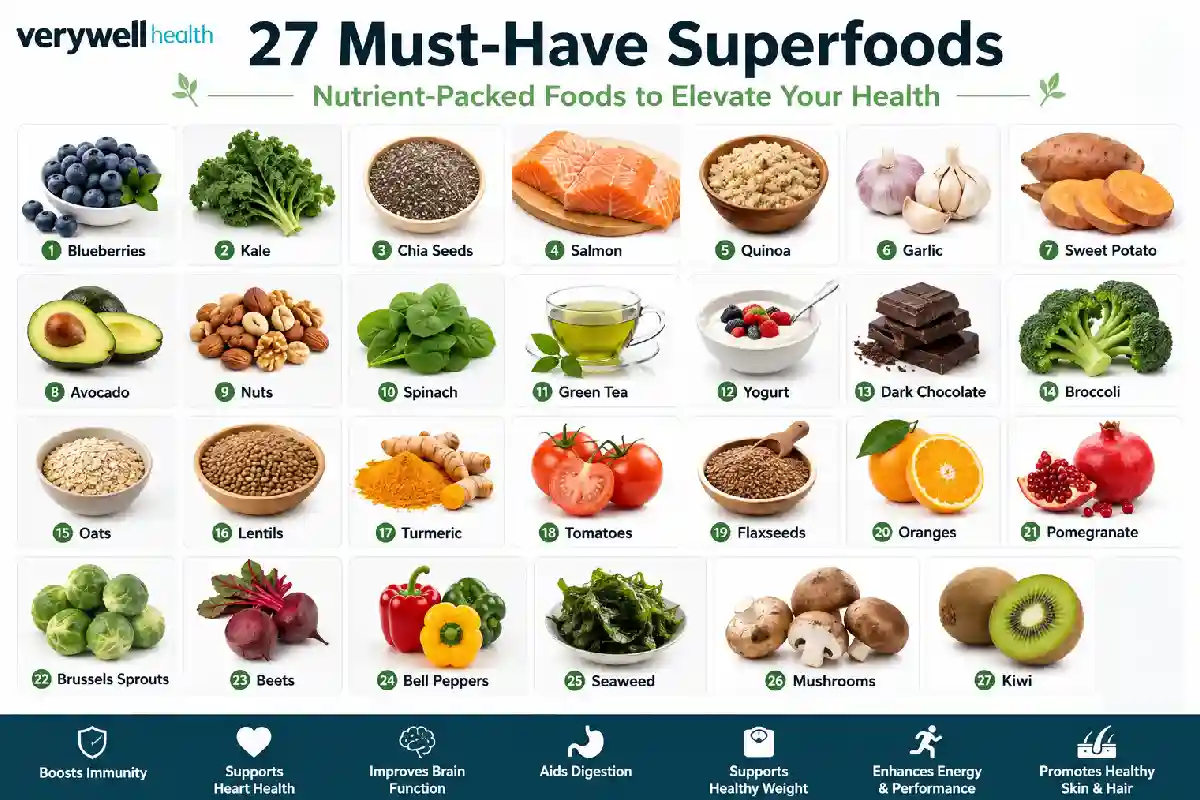
As one tries to get better with their eating habits, it becomes hard for them to pick something up from among their stores. Even though there are many lists of healthy foods available on the Internet, the concept is fairly simple. What one has to do is choose those foods which are nutrient-rich.
The 27 Must-Have Superfoods by Verywell Health has included a wide range of foods. There are greens, fruits, vegetables, whole grains, legumes, nuts, seeds, fish, eggs, fermented foods, herbs, beverages, and healthy fats. Some examples of these foods are green tea, olive oil, garlic, ginger, dark chocolate, broccoli, and berries.
What one should bear in mind about superfoods is that they are not officially classified foods in science.
What Is a Superfood?
Any food that is known for containing a particularly beneficial blend of nutrients and phytochemicals is called a superfood.
That being said, greens provide vitamins and minerals, and fiber and phytochemicals, while fatty fish provides protein and omega-3 fatty acids. Berries provide fiber and antioxidants, while legumes provide protein and fiber.
However, there isn’t one food that contains all the nutrients you require.
What you should focus on is developing a balanced diet with the help of different nutrient-rich foods.
List of the 27 Must-Have Superfoods
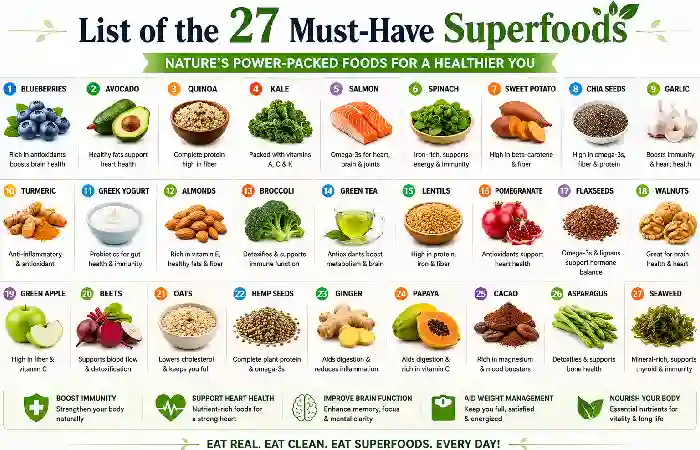
Here is a list of foods of different types offered by Verywell Health.
| Food | Main Nutritional Highlights |
| Dark leafy greens | Vitamins, minerals, fiber |
| Beets | Folate, fiber, plant compounds |
| Broccoli | Fiber, vitamin C, vitamin K |
| Sweet potatoes | Beta-carotene, fiber, potassium |
| Brussels sprouts | Fiber, vitamin C, vitamin K |
| Avocado | Healthy fats, fiber, potassium |
| Berries | Fiber, vitamin C, antioxidant compounds |
| Bananas | Carbohydrates, potassium, vitamin B6 |
| Grapes | Plant compounds and antioxidants |
| Pomegranate seeds | Fiber and polyphenols |
| Citrus fruits | Vitamin C and other plant compounds |
| Yogurt | Protein, calcium, live cultures |
| Whole grains | Fiber, vitamins, minerals |
| Legumes | Protein, fiber, minerals |
| Nuts | Healthy fats, protein, minerals |
| Seeds | Healthy fats, fiber, minerals |
| Tomatoes | Lycopene and vitamin C |
| Pumpkin | Carotenoids, fiber, vitamins |
| Fatty fish | Protein and omega-3 fatty acids |
| Garlic | Sulfur-containing compounds |
| Onions | Plant compounds and fiber |
| Green tea | Catechins and other polyphenols |
| Coffee | Caffeine and antioxidant compounds |
| Olive oil | Monounsaturated fat |
| Dark chocolate | Cocoa polyphenols and minerals |
| Eggs | Protein, choline, vitamins |
| Cinnamon | Flavorful source of plant compounds |
| Ginger | Gingerols and other plant compounds |
The nutritional value of these foods is dependent on the size and variability of the foods as well as the manner in which they are consumed in the total diet program.
1. Leafy Greens
There are various leafy green vegetables such as spinach, kale, collard greens, as well as other leafy green vegetables, and they are easily available to be consumed.
Leafy green vegetables provide both fiber and minerals, along with vitamins and other nutrients. They can be consumed in the form of salads, soups, stir-fried dishes, omelets, wraps, as well as smoothies.
It is important to understand that when adding these leafy greens to your diet, you should not look at them as different food sources but as an addition to your meals.
2. Berries
Various types of berries such as blueberries, strawberries, raspberries, as well as blackberries, provide a naturally sweet flavor as well as fiber content.
These fresh berries can be consumed whenever you get them; however, you can also go for frozen berries. It is important that you avoid using them to prepare desserts, but use them in yogurt, oats, as well as with nuts.
3. Broccoli
This vegetable will go well with almost anything, including rice dishes, pasta dishes, etc.
Broccoli is a good source of fiber and vitamins and can be cooked by roasting, steaming, stir-frying, and using it as an ingredient in soups. Roasting this vegetable with some olive oil and seasonings and garlic, for example, will make it more palatable if you do not like steamed vegetables.
4. Sweet Potatoes
Sweet potatoes are good sources of carbohydrates, fiber, and beta carotene.
They can be baked, roasted, mashed or used to cook soups. Furthermore, the natural sweetness of this product makes it possible to substitute other side dishes made from highly processed products.
Baking sweet potatoes together with beans, vegetables, eggs, or fish enables you to prepare a full dinner from them.
5. Avocado
Unlike other fruits, avocado is a good source of fat, monounsaturated fat, in particular.
Also, avocado contains a lot of fiber and potassium.
It can be spread on whole-grain bread or eaten together with salads, sandwiches, or eggs.
Nevertheless, avocado is a healthy product but not a calorie-free one due to its high density.
6. Fatty Fish
Salmon and other oily fish are among the best sources of protein and Omega-3 fatty acids.
Fish can help you increase your protein intake in an effortless way and add variety to your menu at the same time.
You may choose baked or grilled salmon served with some vegetables and whole grain foods.
7. Legumes
Beans, lentils and chickpeas are inexpensive, yet very diverse products that contain high amounts of protein and fiber.
Legumes are especially useful in case you need to decrease your meat consumption but do not want to eat less filling foods.
Legumes can be included in the following types of dishes:
- Soups
- Salads
- Curries
- Grain-based foods
- Wraps
- Homemade dips
Proteins and fiber content will help you feel fuller.
8. Nuts and Seeds
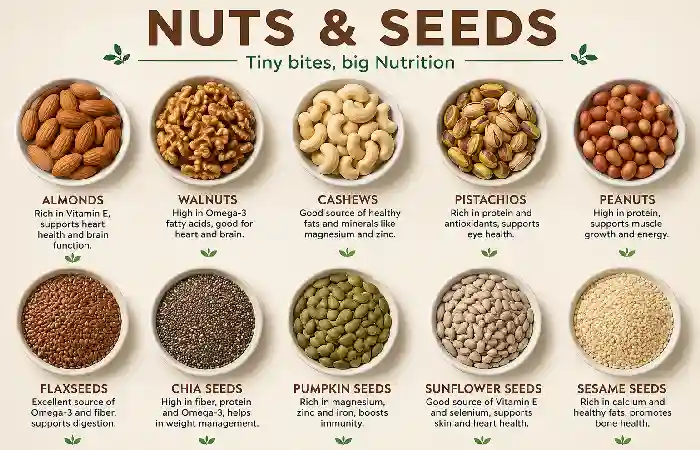
Almonds, walnuts, chia seeds, flaxseeds, pumpkin seeds, and other such products are great sources of healthy fats, proteins, fiber, and minerals.
Some nuts or seeds would be enough as a snack, while seeds may be sprinkled onto your oatmeal, yogurt, salads and smoothies.
It is important to prefer raw products in order to reduce your salt and sugar intake.
9. Whole Grains
Whole grains offer more fiber and nutrients compared to refined grains.
Some examples of whole grains include:
- Oats
- Brown Rice
- Quinoa
- Barley
- Whole grain bread
- Whole grain pasta
Refined grains do not necessarily have to be avoided. Eating whole grains in addition to refined grains would be the best way to begin.
10. Yogurt
Even though not all yogurt will give you protein and calcium, there are those that contain live cultures. Greek yogurt should be used if you need a lot of protein. Do not use the overly sugared and flavored ones. You can eat yogurt with berries, nuts, seeds or oats.
11. Tomatoes
There is no difficulty in incorporating tomatoes into your meals for the week.
Tomatoes can be eaten in salads, sauce, sandwiches or even roasted together with other vegetables. One of the plant compounds found in tomatoes is called lycopene.
12. Citrus Fruits
Citrus fruits such as oranges, grapefruits, lemons, limes and others will give you vitamins and other plant compounds. It is worth mentioning that whole fruits are more satisfying than fruit juices because you get the fiber in the process.
13. Eggs
Eggs are an easy-to-prepare food that provides protein and several vitamins and minerals such as choline.
They are also a very versatile product.
One can cook them as:
- Scrambled eggs
- Omelets
- Boiled eggs
- Poached eggs
- Egg sandwiches
- Vegetable frittatas
A vegetable omelet can be a simple recipe of combining several healthy products in one dish.
14. Garlic and Onions
Garlic and onions might not be considered superfoods at first sight, but they can still be great additives to daily nutrition.
They have different plant compounds and can provide a lot of taste without adding a lot of sugar, salt, or sauces.
Incorporating garlic and onions in one’s diet is a great way to make meals healthy and delicious at the same time.
15. Green Tea and Coffee
The Verywell Health list includes drinks such as green tea and coffee. Drinks include ingredients that have been tested in relation to their impact on health.
It is very important to pay attention to the distinction between the drink itself and what it includes.
It is not required to use sugar when drinking green tea, but coffee may become a totally different drink with syrup, whipped cream, and other additions.
If one enjoys drinking such beverages, then the consumption of additional sugar should reduce.
16. Extra-Virgin Olive Oil
Extra-virgin olive oil is often used in Mediterranean-style diets as a source of monounsaturated fats.
It may consume in salads, roast vegetables, and while preparing food.
Since healthy oils are high in calories, it is not necessary to use much of it in any dish.
17. Dark Chocolate
Dark chocolate include in the Verywell Health list due to the presence of polyphenols in cocoa.
This does not mean that all chocolates are equally useful.
Remember the whole product, including its added sugar and portions. Dark chocolate in small portions will be great for any healthy diet.
18. Cinnamon and Ginger
Another two spices I find very intriguing on this list are cinnamon and ginger.
They provide you with an option to add some flavoring but with reduced amounts of sugars and salts.
You can add cinnamon to your oatmeal or yogurt and ginger to your stir-fry, soups, curry, and tea.
Conclusion
Therefore, it could be a good idea to begin with Verywell Health’s 27 superfoods list when creating your grocery list. The list features quite diverse food options ranging from greens, berries, legumes, whole grains, fish, yogurt, nuts, seeds, olive oil, garlic, and even ginger.
Nevertheless, the most important thing here is that you don’t necessarily need to eat 27 types of food. Healthy eating is quite simple – eat varied whole foods and foods with minimal processing, plenty of veggies and fruits, protein sources, moderate amounts of healthy fats, and foods that you can actually make and enjoy.
It is not necessary for your grocery list to be a masterpiece. It only needs to include varied enough foods for the meals that you make.
