Getting dressed for work should not feel harder than the work itself. Yet many women spend extra time every morning deciding what looks professional enough, comfortable enough, and appropriate for their workplace. Office wear sits in a tricky middle ground — it needs to look put together without feeling stiff or impractical.
This guide covers formal office looks, smart casual options, work-from-home outfits, and the accessories that help complete a work-appropriate appearance. The focus is on practical combinations that most women can actually wear and repeat.
Understanding Your Workplace Dress Code
Before choosing outfits, it helps to understand the general expectation at your workplace.
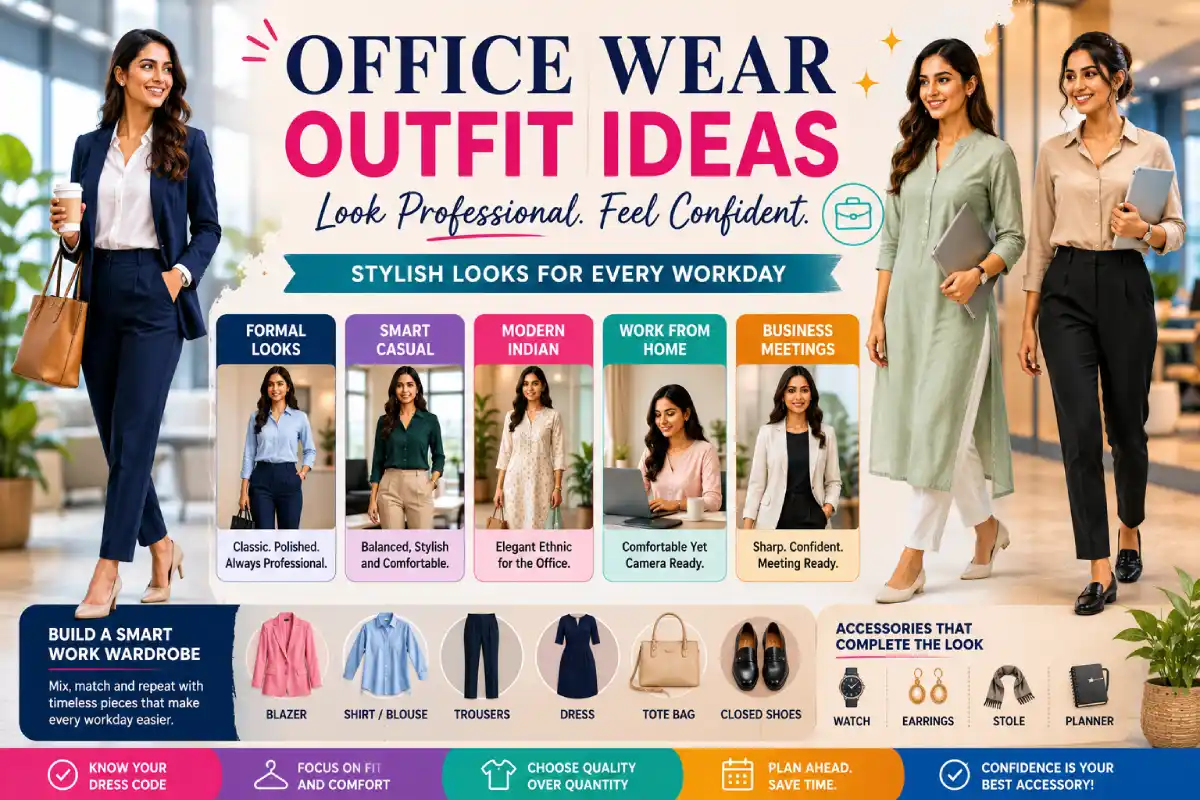
Formal / Traditional offices Banks, law firms, government offices, and many corporate environments still expect more structured clothing. Shirts, trousers, formal kurtis, sarees, or tailored dresses are common. Closed shoes are usually preferred.
Smart casual / Modern offices Many startups, creative companies, and contemporary workplaces accept a more relaxed standard. Dark jeans, neat tops, clean sneakers or loafers, and well-fitted casual kurtis often work.
Hybrid or flexible environments Some offices have different expectations on different days. Client-facing days may require more formal clothing, while regular days allow more ease.
When in doubt, observe what colleagues at your level wear and aim for a similar or slightly neater standard. It is usually safer to be a little more polished than too casual.
Formal Office Looks
Formal office outfits need structure and neatness. The goal is to look competent and put-together without appearing overdressed for a regular workday.
Reliable formal combinations:
- Well-fitted trousers + formal shirt or blouse + closed shoes
- Straight or A-line kurti with matching or complementary pants + formal footwear
- Tailored dress in a solid colour or subtle print + minimal accessories
- Formal saree with a simple blouse for traditional workplaces
- Blazer over a simple top and trousers for added structure
Neutral colours dominate formal office wear for good reason. Black, navy, grey, beige, white, and soft pastels are easy to mix and look professional under office lighting. Bright or very trendy pieces can work as accents but are harder to repeat daily.
Fabric choices for formal wear Cotton blends, linen blends, georgette, crepe, and good quality polyester blends are common. The fabric should hold some shape and not wrinkle excessively by midday. Very thin or clingy fabrics can become uncomfortable and less professional-looking as the day progresses.
Smart Casual Office Outfits
Smart casual is the most common dress code in many modern workplaces. It allows more personality while still maintaining a neat appearance.
Practical smart casual ideas:
| Outfit Type | Combination | When it works well |
| Elevated basics | Dark jeans + neat top + loafers or clean sneakers | Regular workdays |
| Soft formal | Trousers + simple blouse or knit top | Most office environments |
| Modern Indian | Well-fitted kurti + straight pants + simple footwear | Offices that accept Indian wear |
| Dress-based | Midi or shirt dress + light shrug or jacket | Warm days or creative offices |
| Layered look | Basic top + open shirt or light jacket + trousers | Air-conditioned offices |
Dark jeans can work in many smart casual offices if they are well-fitted, clean, and free of heavy distressing or embellishment. Pairing them with a polished top and proper shoes makes a noticeable difference.
The key difference between pure casual and smart casual is often the footwear and the neatness of the top half. Clean shoes and a tidy top raise the overall standard quickly.
Work From Home Outfits
Working from home changed how many people think about office wear. While the pressure to dress formally reduced, completely neglecting appearance can affect how you feel during the day.
Practical WFH approaches:
- Comfortable but neat top + lounge pants or joggers (for video calls, keep the top presentable)
- Soft kurti or tunic with comfortable pants
- Clean t-shirt or shirt with relaxed trousers
- Simple dress that feels easy to wear all day
On days with video calls, it helps to keep a few reliable tops that look tidy on camera. Solid colours and simple necklines usually work better than busy prints or very low necklines.
Even when working from home, changing out of night clothes can improve focus for many people. It does not need to be formal — just a clear shift into “daytime” clothing.
Accessories for Work
Accessories for the office should support a professional appearance rather than dominate it.
Useful work accessories:
- Simple earrings or small studs
- A basic watch
- Clean, structured handbag or tote that fits a laptop if needed
- Minimal necklace if it does not distract
- Light stole or scarf for air-conditioned offices or changing weather
- Professional footwear that you can walk in comfortably
Bags matter more than many realise. A neat, functional bag that holds your daily essentials looks more professional than a very casual or overly decorative one. Footwear should balance appearance with the amount of walking your day involves.
Avoid excessive jewellery or very trendy pieces that may not suit a professional setting. One or two simple items are usually enough.
Building a Work Wear Wardrobe
A practical office wardrobe does not need to be large. A focused set of pieces that mix well reduces daily decisions.
Core work pieces worth having:
- 2–3 pairs of formal or semi-formal trousers
- 3–4 formal or neat tops and shirts
- 2–3 work-appropriate kurtis
- 1–2 tailored dresses or jumpsuits
- 1 light blazer or structured jacket
- 1–2 pairs of closed professional shoes
- 1 reliable work bag
Once these basics are in place, most weekly outfits become combinations of existing pieces. New items can then fill specific gaps rather than adding more unused clothes.
Colour strategy Sticking to a limited colour palette (for example navy, black, beige, white, and one or two soft colours) makes mixing easier. Everything coordinates with less effort.
Common Office Wear Mistakes
Several issues appear regularly:
- Wearing clothes that become visibly wrinkled or uncomfortable by afternoon
- Choosing footwear that looks good but cannot handle a full workday of walking
- Ignoring fit — clothes that are too tight or too loose both look less professional
- Over-accessorising
- Treating “smart casual” as fully casual
- Not having a backup outfit option for unexpected meetings or presentations
Testing outfits for comfort during a normal day (sitting, walking, reaching) prevents many of these problems.
Seasonal Adjustments for Office Wear
Summer Prefer lighter fabrics and slightly looser fits. Cotton and linen blends help. Keep a light stole for over-air-conditioned offices.
Monsoon Choose fabrics that dry reasonably quickly and shoes that can handle some wetness. Avoid very long hems that collect dirt easily.
Winter Layering becomes useful. A basic top with a light sweater, jacket, or stole adds warmth. Closed shoes become more practical in colder regions.
Final Thoughts
Office dressing works best when it feels repeatable and low-stress. The goal is not to create a new impressive outfit every day. It is to have a set of reliable combinations that look neat, feel comfortable for long hours, and suit the environment you work in.
Start by understanding the actual expectations at your workplace. Build a small group of pieces that fit well and mix easily. Pay attention to shoes and bags, as they influence the overall impression more than many people expect. Keep a few video-call-friendly tops ready if you work hybrid or from home.
When your work clothes support you instead of creating daily friction, getting dressed becomes a smaller part of the morning and the focus can stay on the actual work.
