
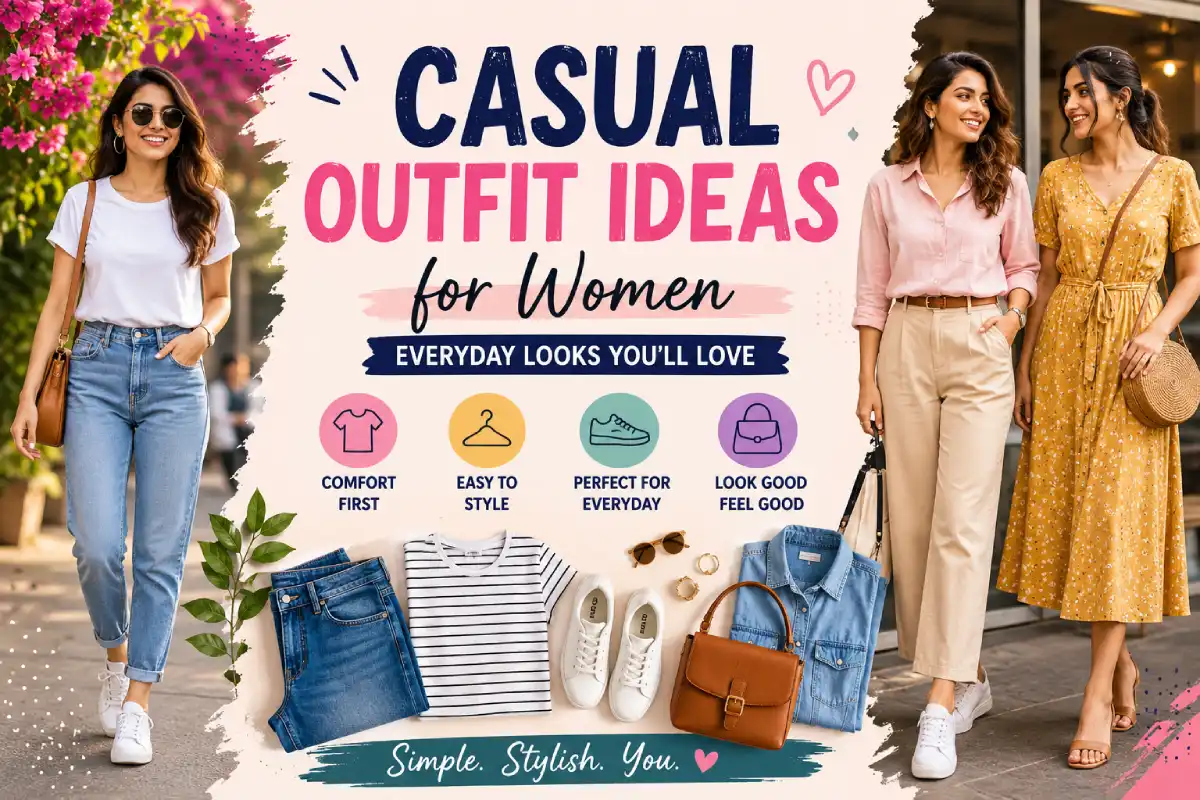
Most mornings start the same way. You stand in front of the cupboard, pull out the same few things, and hope they still look okay. Casual clothes are supposed to make life simpler, but somehow even everyday dressing can feel confusing. Too many options, unclear what goes with what, and the constant feeling that nothing looks quite right.
This guide is meant to make casual dressing easier. It covers real everyday looks, weekend outfits, smart casual combinations, accessories that actually help, and practical ways to build a wardrobe that works without constant shopping. The focus is on comfort, simplicity, and clothes you will actually wear more than once or twice.
Why Casual Outfits Matter More Than You Think
Casual clothing is what you live in. Office wear and party clothes get attention, but most of your time is spent in everyday outfits. When those outfits feel comfortable and reasonably put together, your day starts better. When they feel messy or uncomfortable, it affects how you move through the day.
Good casual dressing is not about looking expensive. It is about having a few reliable combinations that fit well, feel good, and require very little decision-making. The less time you spend deciding what to wear, the more mental energy you have for other things.
Everyday Casual Looks
Everyday outfits are for regular days — going to the market, meeting a friend for coffee, college, running errands, or working from home when you still want to feel dressed.
Reliable everyday formulas:
- Well-fitting jeans + plain or simple printed t-shirt + clean sneakers
- Cotton kurti + straight pants or jeans + flat sandals or kolhapuris
- Loose button-up shirt + leggings or joggers + slip-on shoes
- Simple midi or shirt dress + flat sandals
- Oversized shirt or shrug over a basic top + denim or cotton pants
These combinations work because they are flexible. You can change the shoes or add a light jacket and the look shifts slightly without needing a complete change.
Fabric choices for everyday wear
In most parts of India, the weather plays a big role. Heavy fabrics become uncomfortable quickly. Cotton, light rayon, linen blends, and soft jersey work better for daily wear than stiff or synthetic materials that trap heat.
If you sweat easily or live in a humid city, prioritise breathable fabrics. A cotton kurti will almost always feel better by afternoon than a polyester top, even if the polyester one looked nicer in the shop.
Colour and mixing tips
You do not need a colourful wardrobe to look good. Having a base of neutrals (black, white, beige, grey, navy) makes mixing easier. Add a few softer colours or simple prints if you like them. The advantage of neutrals is that almost everything goes together, so you waste less time matching.
Weekend Outfit Ideas
Weekends usually allow a bit more ease, but most people still want to look presentable if they step out.
Practical weekend combinations:
| Situation | Outfit Idea | Why it works |
| Brunch or café | Midi dress or co-ord set + clean sneakers | Comfortable and looks intentional |
| Market or shopping | Kurti + jeans + comfortable flats | Easy to walk in and neat |
| Meeting friends | Wide-leg pants + simple top + light jacket | Relaxed but not sloppy |
| Short day trip | Linen or cotton shirt + trousers + slip-ons | Breathable and practical |
| Relaxed evening | Soft knit top + comfortable pants + loafers | Comfortable for longer wear |
The goal on weekends is usually comfort first, style second. Clothes that allow you to sit, walk, and move easily will always get worn more than outfits that look good only while standing.
Many women find that having two or three reliable weekend outfits reduces decision fatigue. Once you know what works, you can repeat it without feeling underdressed.
Smart Casual Outfits
Smart casual is the middle ground. It is more polished than pure everyday wear but not as formal as office or event clothing. This category is useful for casual workplaces, client meetings that are not too formal, family gatherings, or dinners that are not full party mode.
Simple smart casual formulas:
- Dark straight or slim jeans + neat top or blouse + light blazer or structured shrug
- Well-fitted trousers + tucked-in shirt or simple knit + loafers
- Midi skirt + clean top + ballet flats or low heels
- Long or straight kurti with tailored pants + minimal jewellery
- Neutral co-ord set with basic accessories and clean footwear
The difference between everyday and smart casual often comes down to fit, fabric, and shoes. A pair of dark jeans with a clean top and loafers already looks more intentional than the same jeans with a worn t-shirt and old sneakers.
Shoes that elevate casual outfits
Footwear changes the entire feel of an outfit. Clean white sneakers work for many casual looks. Loafers, simple ballet flats, and well-kept sandals help when you need to look a little sharper. Avoid heavily worn or dirty shoes if you want the outfit to look considered.
Accessories That Make a Difference
Accessories should support the outfit, not overpower it. For everyday and casual wear, less usually works better.
Useful everyday accessories:
- Small earrings or simple studs
- A basic watch or thin bracelet
- Clean tote, crossbody, or structured handbag
- Light stole or scarf (helpful in air-conditioned places or changing weather)
- Minimal necklace if you like wearing one
One or two pieces are enough for most days. When accessories start competing with the clothes, the overall look becomes busy.
Bags matter more than many people realise. A clean, simple bag makes even basic clothes look more put together. A worn-out or overly decorative bag can make a good outfit look unfinished.
Building a Practical Casual Wardrobe
Instead of buying random pieces, it helps to think in terms of a small set of reliable items that mix well.
Core pieces worth having:
- 2–3 pairs of well-fitting jeans or trousers in different colours
- 4–5 basic tops and t-shirts in neutral or soft colours
- 2–3 comfortable kurtis or tunics
- 1–2 simple dresses that can be dressed up or down
- 1 light jacket, shrug, or overshirt
- 2 pairs of reliable everyday shoes
- 1 clean bag for daily use
Once you have these, most everyday outfits become combinations of things you already own. New purchases can then fill actual gaps instead of adding more unused clothes.
How to shop smarter for casual wear
Try clothes in natural light if possible. Move around in them — sit, walk, raise your arms. If something feels restrictive in the trial room, it will feel worse after a few hours of real wear. Check the fabric content. Prefer natural or breathable blends for pieces you plan to wear often.
Common Mistakes in Casual Dressing
Several patterns show up again and again:
- Wearing clothes that are too loose or too tight in the name of comfort
- Ignoring fit while focusing only on style
- Keeping shoes that are worn out because they are “just for casual use”
- Buying trendy pieces that do not mix with anything else
- Over-accessorising simple outfits
- Not maintaining basic clothes (wrinkled or faded pieces pull the whole look down)
Fixing these usually improves how outfits look more than buying new clothes.
Seasonal Adjustments for Casual Outfits
Summer / Hot weather Prioritise light fabrics, looser fits, and breathable footwear. Cotton kurtis, linen shirts, simple dresses, and open sandals work well. Avoid heavy layers and dark colours that absorb heat.
Monsoon Quick-drying fabrics and shoes that can handle some wetness help. Avoid long trailing hems that get dirty easily. Keep a light stole or jacket for sudden temperature changes in offices or malls.
Winter / Cooler weather Layering becomes useful. A basic top with a light sweater, jacket, or stole adds warmth without needing completely different outfits. Closed shoes or boots (if weather requires) change the feel of the same trousers or jeans.
How to Make Casual Outfits Look More Intentional
Small details create the difference between “I just threw this on” and “I got dressed”:
- Clothes are clean and reasonably wrinkle-free
- Shoes are not heavily worn or dirty
- The fit is right for your body
- One small accessory is present
- Colours or pieces relate to each other somehow
You do not need expensive clothes for this. Attention to these basics improves almost any outfit.
Final Thoughts
Casual dressing works best when it feels natural rather than forced. The aim is not to create a perfect Instagram look every day. It is to have a set of clothes that feel comfortable, look neat, and do not require constant decisions.
Start with what you already own. Notice which pieces you reach for most often and why. Build around those. Keep a few reliable combinations ready so mornings stay simple. Add new items only when you clearly need them.
When your everyday clothes support you instead of creating extra stress, getting dressed becomes one less thing to manage. That is the real value of good casual outfits.
