
Beauty and skincare used to depend a lot on guesswork. You tried a cream because your friend liked it. You bought a serum because it looked nice in the advertisement. Sometimes it helped. Many times it did not. You spent money and still felt confused about what your skin really needed.
In 2026, digital technology is changing this picture. Artificial intelligence (AI) and augmented reality (AR) are making skincare more personal and practical. These tools help people understand their skin better, try products without waste, and choose routines that suit them more closely.
This article explains the main changes in simple words. We will look at how AI and AR work in beauty, what they can do today, their limits, and where skincare is heading in the future.
What Digital Transformation Means in Beauty
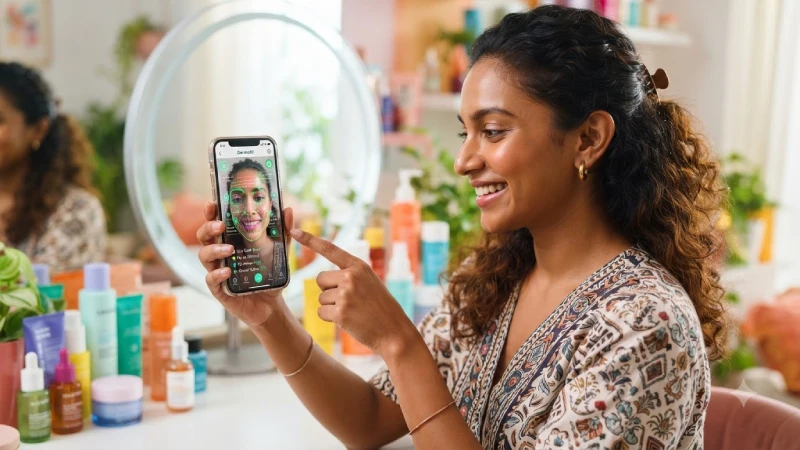
Digital transformation simply means using technology to improve how beauty products are discovered, chosen, tested, and used. Instead of one product for everyone, technology tries to match products to individual skin.
The two strongest tools right now are:
- AI (Artificial Intelligence) – computers that can study photos of your skin, find patterns, and give suggestions.
- AR (Augmented Reality) – technology that places virtual makeup or effects on your real face through the phone camera.
Together they are making skincare smarter and more convenient.
How AI is Changing Skincare
AI is the biggest force behind personalised skincare today.
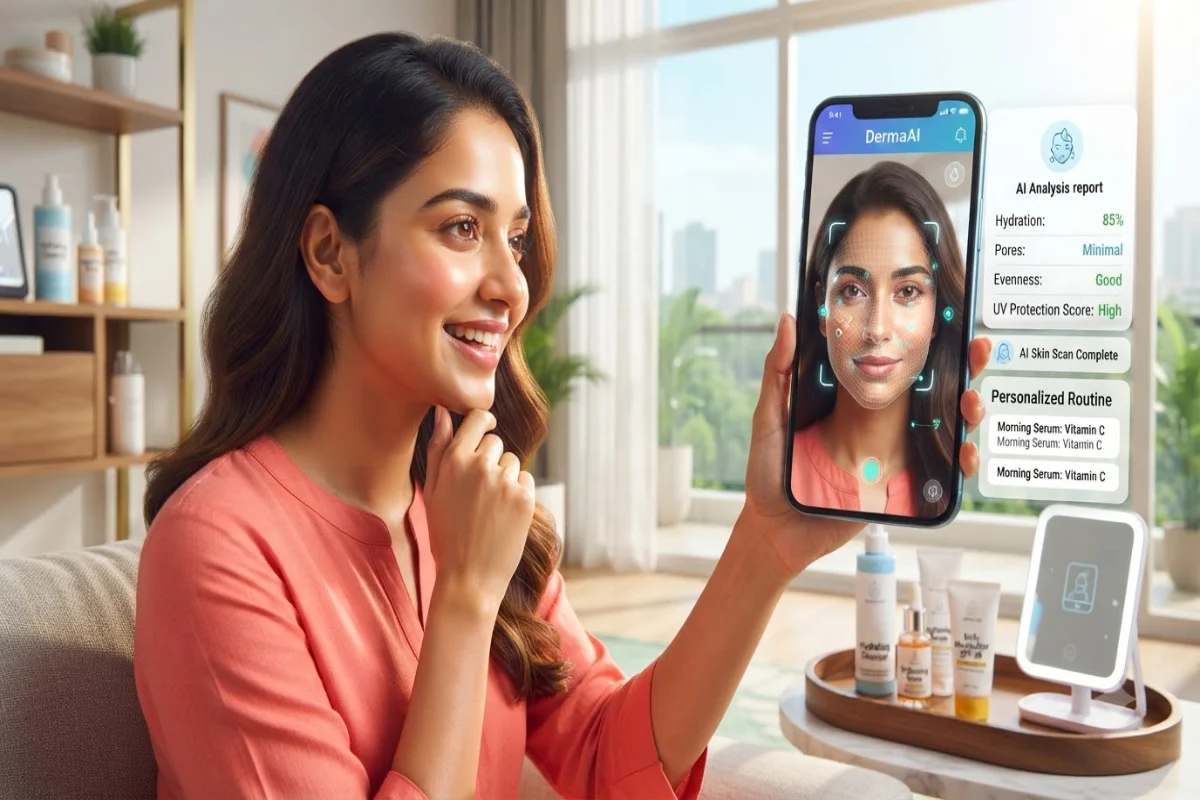
AI Skin Analysis
You take a clear selfie or scan your face with an app. The AI examines things like:
- Pore size
- Dark spots and pigmentation
- Fine lines and wrinkles
- Redness and irritation
- Hydration levels
- Overall texture
Within seconds it gives a report. Some tools also suggest products or a full routine based on the results.
This is useful because many people cannot always visit a dermatologist for small concerns. AI gives a starting point. It also helps track changes if you scan your skin every few weeks or months.
Personalised Recommendations
AI does not stop at analysis. It can look at your skin type, concerns, climate, and even past product preferences. Then it suggests cleansers, serums, moisturisers, or sunscreens that are more likely to work for you.
Some platforms create custom routines. Others help brands develop products based on large amounts of skin data.
Smart Devices
AI is also entering physical tools. Smart mirrors can scan your skin in the morning. Some LED masks and home devices adjust their settings according to AI readings. Wearable sensors that track moisture or UV exposure are also appearing.
These devices are still new and often expensive, but they show the direction skincare is taking.
How AR is Changing the Beauty Experience
AR is most visible in makeup, but it also supports skincare decisions.
Virtual Try-On
With AR, you can see how a lipstick, foundation, or eyeshadow looks on your actual face without applying anything. The camera tracks your face and places the product virtually in real time.
This reduces the chance of buying a shade that does not suit you. It is especially helpful for online shopping and for people who feel shy testing many products in stores.
Some skincare tools use AR to show possible results. For example, they may show how skin might look after weeks of using a brightening serum. These simulations are estimates, not guarantees, but they help set realistic expectations.
Better Shopping Experience
AR makes online beauty shopping closer to the in-store experience. You can try multiple options quickly, compare shades, and feel more confident before paying.
Key Benefits of AI and AR in Skincare
| Benefit | How It Helps | Example |
|---|---|---|
| Personalisation | Advice based on your skin, not general rules | AI suggests products for pigmentation in Indian skin |
| Convenience | Analysis and try-on from home | Scan face while sitting on the sofa |
| Reduced waste | Fewer wrong product purchases | Virtual lipstick try-on before buying |
| Tracking progress | See changes over time | Monthly AI scans show improvement |
| Access | Guidance without visiting a clinic every time | Useful for people in smaller towns |
| Better matching | Products suited to skin tone and concerns | Foundation shade matching |
Technology is helpful but not perfect.
- AI results depend on good lighting and clear photos. Poor photos can give wrong readings.
- Many tools are linked to brands, so recommendations may favour their own products.
- AI cannot replace a dermatologist for serious conditions like severe acne, eczema, or sudden changes.
- Privacy is a real concern. Face scans are personal data.
- Some expensive devices promise more than they deliver.
- AR try-on works better for makeup than for long-term skincare results.
The smart way is to use these tools as helpers, not as the final authority.
How Digital Tools are Useful for Indian Skin
Indian skin often faces specific challenges: higher chance of pigmentation, effects of humidity and pollution, hard water, and strong sun. Digital tools can help in practical ways.
AI analysis can pick up common concerns like uneven tone or excess oil in the T-zone. Virtual try-on works across a wide range of Indian skin tones. Apps available on local platforms make the technology easy to access.
Many people in India now start with free AI scans and virtual try-ons before spending money on new products. This reduces trial-and-error.
Practical Ways to Start Using These Technologies
You do not need to buy expensive gadgets.
- Try free or low-cost AI skin analysis apps with a clear daytime photo.
- Use virtual try-on features on major beauty shopping apps for makeup and foundation.
- Read the full AI report instead of only looking at product suggestions.
- Combine AI advice with basic knowledge (for example, never skip sunscreen).
- Scan your skin every 4–6 weeks to notice real changes.
- Check privacy settings before uploading face photos.
Start with one tool and see if it feels useful.
Comparison: Old Way vs New Digital Way
| Aspect | Traditional Approach | Digital Approach (2026) |
|---|---|---|
| Understanding skin | Guessing or visiting doctor | AI scan in seconds |
| Choosing products | Trial and error or sales advice | Personalised recommendations |
| Trying makeup | In-store testers | Virtual try-on at home |
| Tracking results | Memory or occasional photos | Regular AI reports |
| Access to guidance | Limited by location and time | Available on phone anytime |
| Risk of wrong purchase | Higher | Lower with better matching |
Looking ahead, several trends are becoming stronger.
More accurate analysis
AI will get better at reading different skin tones, ages, and climates. Results will become more reliable.
Predictive skincare
Instead of only showing current problems, tools may predict future concerns based on lifestyle, age, and environment. This can help people start prevention earlier.
Deeper personalisation
Some companies are working on custom formulations based on individual data. While fully custom products are still limited, more personalised options are expected.
Better integration
AI analysis, AR try-on, product recommendations, and even ordering may happen in one smooth experience inside apps.
Combination with science
AI is starting to work with biotechnology and advanced ingredients. This may lead to more effective and targeted products.
Wider access
As technology becomes cheaper, more people in different parts of India will be able to use good digital tools.
At the same time, human experts will remain important. Technology can guide, but a trained dermatologist is still needed for diagnosis and treatment of medical skin issues.
Simple Advice for Readers
- Use AI and AR as supporting tools, not as the only source of truth.
- Always protect your skin with sunscreen, no matter what any app says.
- Focus on consistent basic routine first (cleanse, moisturise, protect).
- Be careful with your personal data and face scans.
- If you have persistent problems, consult a real doctor.
Final Thoughts
Digital transformation through AI and AR is making skincare more intelligent and more personal. In 2026, you can understand your skin better, try products more safely, and reduce wasted money. These tools are especially helpful when used with common sense and basic skincare habits.
The future looks promising. Technology will continue to improve, but the goal remains the same: healthier, more comfortable skin.
Start with simple free tools available on your phone. Observe how they help you. Over time, digital beauty can become a useful part of your regular skincare journey — not by replacing good habits, but by supporting them in smarter ways.
