
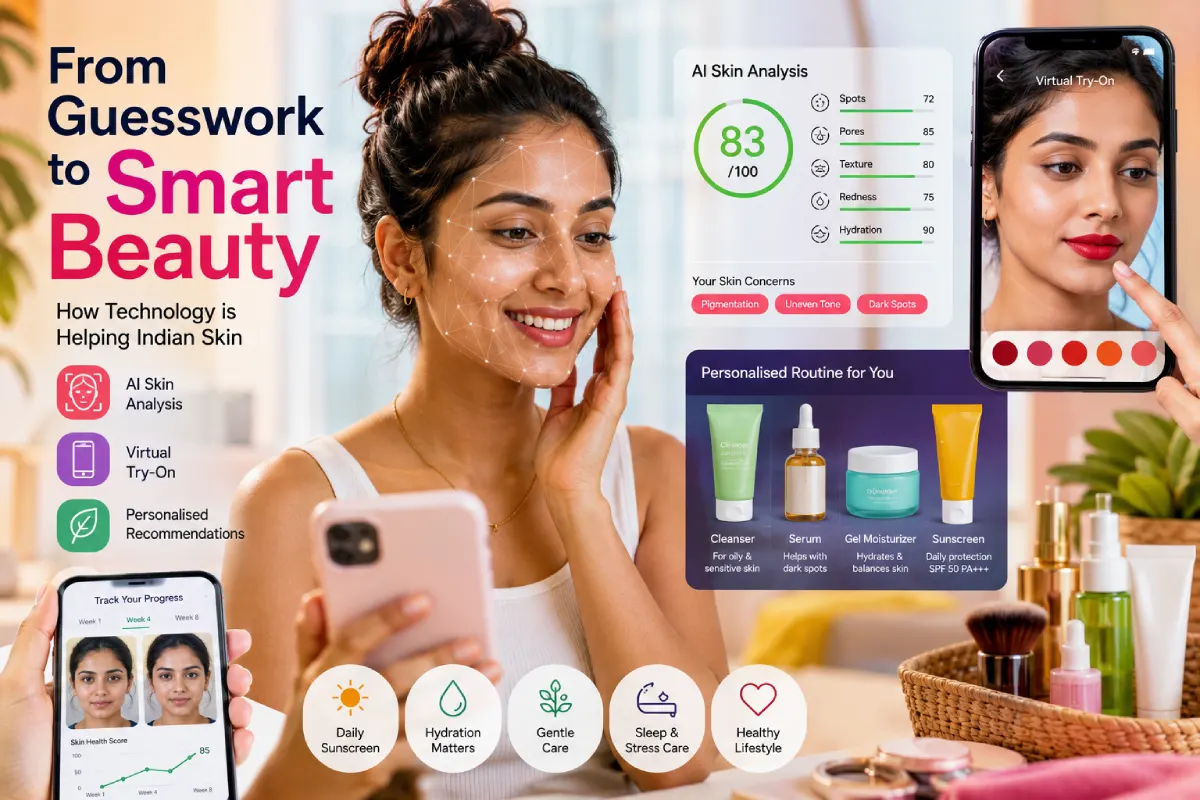
From Guesswork to Smart Beauty: How Technology is Helping Indian Skin
For a long time, taking care of Indian skin felt like guesswork. You tried a cream because your cousin used it. You bought a face wash because it was on offer. You followed a routine you saw on social media. Sometimes your skin looked better. Many times it stayed the same or even became more irritated.
Indian skin has its own set of challenges. Strong sun, high humidity in many places, pollution in cities, hard water, and a natural tendency toward pigmentation and uneven tone. What works for someone in a cooler, less humid country often does not work the same way here.
In 2026, technology is slowly reducing this guesswork. Artificial intelligence, phone cameras, and smart apps are giving people better ways to understand their own skin and choose products more carefully. This article explains how these tools are helping Indian skin in practical, everyday ways.
Why Indian Skin Needs Better Guidance
Indian skin is not one single type. It ranges from fair to deep tones. Many people have combination skin — oily in the T-zone and normal or dry on the cheeks. Pigmentation, dark spots, and tanning are common concerns. Humidity can increase oil and breakouts, while air conditioning and winters can make skin dry and tight.
Older advice was often too general. “Use this for oily skin” or “apply this for glow” did not always match real conditions. Technology is starting to look at individual faces and local factors instead of giving the same suggestion to everyone.
How Technology is Reducing Guesswork
1. AI Skin Analysis for Indian Faces
One of the most useful changes is AI skin analysis. You take a clear photo of your face with your phone. The app studies the image and reports on pores, dark spots, redness, hydration, texture, and other points.
For Indian users, this is helpful because many tools are improving at reading a wider range of skin tones. They can pick up common issues like uneven pigmentation or excess oil in humid weather. Some apps also consider climate data or ask simple questions about your lifestyle.
The report usually gives a simple score or description and suggests next steps. It is not a medical diagnosis, but it gives a clearer starting point than pure guessing.
2. Virtual Try-On That Works for Indian Skin Tones
Trying foundation or lipstick used to be difficult. Store lighting was different from daylight. Some shades looked good in the shop but wrong at home. Hygiene was also a concern with shared testers.
Augmented reality (AR) virtual try-on has changed this. You open the camera in a beauty app, and the technology places the product on your real face in real time. You can check how a foundation shade blends with your actual skin tone or how a lipstick colour looks on you.
Many Indian shopping platforms now offer this feature. It works across different skin tones and helps people avoid buying shades that do not suit them. This is especially useful for online shopping, which many people prefer.
3. Personalised Product Suggestions
Instead of random recommendations, AI can now look at your skin analysis, concerns, and preferences. It then suggests products that are more likely to match. Some tools focus on common Indian concerns such as pigmentation, oil control in humidity, or barrier repair after hard water exposure.
This does not mean every suggestion will be perfect. But it is usually better than buying something only because it is popular or heavily advertised.
4. Tracking Changes Over Time
One quiet but useful benefit is tracking. If you scan your skin every few weeks, you can see whether a routine is actually helping. Dark spots may look lighter. Texture may improve. Oiliness may reduce. This kind of feedback was hard to get before.
Practical Benefits for Everyday Indian Users
| Problem Common in India | How Technology Helps |
|---|---|
| Pigmentation and dark spots | AI detects uneven tone and tracks improvement |
| Oily T-zone + dry cheeks | Analysis shows combination pattern clearly |
| Wrong foundation or lipstick shade | Virtual try-on shows real match on your face |
| Wasting money on unsuitable products | Better matching reduces trial and error |
| Limited access to dermatologists | Basic guidance available on phone |
| Confusion from too many products | Personalised shortlists make choice easier |
Simple Ways to Use These Tools Today
You do not need expensive devices to start.
- Choose a clear, well-lit photo for any AI scan. Natural daylight near a window works best.
- Try virtual try-on for foundation and lipstick before buying online.
- Read the full AI report, not just the product list.
- Use the suggestions as ideas, then check ingredients and reviews.
- Scan your skin every 4 to 6 weeks if you want to track progress.
- Always combine technology advice with basic habits — gentle cleansing, moisturising, and daily sunscreen.
What Technology Still Cannot Do
It is important to stay realistic.
- AI cannot replace a dermatologist for medical problems such as severe acne, eczema, sudden rashes, or infections.
- Results depend on photo quality. Bad lighting or filters can mislead the analysis.
- Some apps push their own products more than neutral options.
- Privacy of face data is a real concern. Check what the app does with your photos.
- No app can fix poor sleep, high stress, or lack of sunscreen.
Technology is a helper, not a complete solution.
Comparison: Old Guesswork vs Smart Beauty Approach
| Aspect | Old Guesswork Way | Smart Beauty Way (2026) |
|---|---|---|
| Understanding skin | Trial and error or general advice | AI analysis of your own face |
| Choosing products | Popularity or advertisement | Suggestions based on your scan |
| Trying shades | Store testers or hope | Virtual try-on on your real face |
| Seeing progress | Memory or occasional selfies | Regular scans and reports |
| Suitability for Indian skin | Often overlooked | Improving focus on diverse tones and climate |
| Risk of wrong purchase | High | Lower with better matching |
The Growing Role of Local Platforms and Awareness
In India, major beauty platforms and newer digital dermatology services are making these tools more accessible. Virtual try-on is becoming common. AI skin checks are appearing in more apps. Awareness is also rising — more people now understand that skin type and concerns can be measured instead of only guessed.
At the same time, traditional knowledge and simple habits still matter. Technology works best when it supports good basic care rather than replacing it.
Looking Ahead: What May Come Next
In the coming years we can expect:
- More accurate AI that understands Indian skin tones and local climate better
- Better tracking of pigmentation and barrier health
- More affordable smart tools
- Smoother connection between analysis, recommendations, and purchase
- Greater focus on prevention rather than only fixing visible problems
The direction is clear: skincare is becoming more data-based and more personal.
Practical Advice for Readers
- Start with free or low-cost tools available on your phone.
- Use technology to learn about your skin, not to collect more products.
- Keep your routine simple. Technology should reduce confusion, not increase it.
- Protect your personal data and face scans.
- If you have ongoing or serious skin issues, see a qualified doctor.
Final Thoughts
For many years, caring for Indian skin involved a lot of trial, error, and hope. Digital tools are now making the process smarter. AI can read your skin more clearly. AR can show how products look on you. Personalised suggestions can reduce wasted money.
These changes are useful, especially when used with common sense. Technology does not replace good habits, but it can support them. It helps you move from pure guesswork toward more informed choices.
You can begin today with a simple face scan or a virtual try-on. Observe what feels helpful. Over time, smart beauty tools can become a practical part of how you care for your skin — clearer, more personal, and better suited to the real conditions of Indian life.
