Heat styling is one of the biggest reasons hair becomes dry, brittle, and prone to breakage. Regular flat irons, curling wands, and hair dryers can reach very high temperatures. When used often, they slowly damage the hair cuticle.
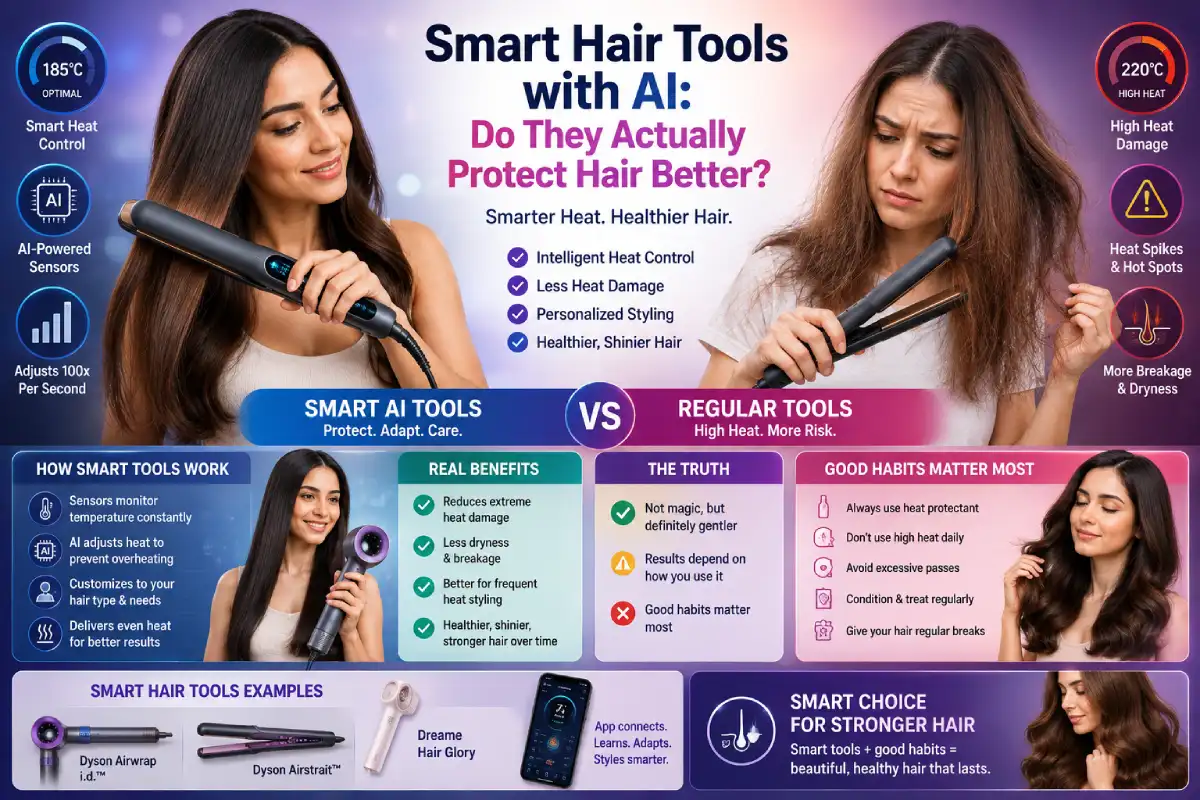
In recent years, brands have started adding sensors and artificial intelligence to hair tools. These “smart” devices claim they can protect hair better by controlling heat more carefully, adjusting to your hair type, and reducing unnecessary damage. Popular examples include advanced tools from Dyson and newer AI-focused brands like Dreame.
The important question is: do these smart AI hair tools actually protect hair better than regular ones, or is it mostly marketing?
This article looks at how these tools work, what the advantages are, where the limits are, and whether they are worth the higher price.
What Makes a Hair Tool “Smart” or AI-Powered?
Traditional tools usually have fixed heat settings (for example, low, medium, high). You choose the temperature and hope it is right for your hair.
Smart AI hair tools add extra features such as:
- Sensors that measure temperature many times per second
- Automatic heat adjustment to avoid extreme spikes
- Ability to learn or adapt to your hair type through an app
- Different modes based on hair thickness, damage level, or moisture
- Sometimes airflow control that works together with heat
The goal is to give enough heat to style the hair while reducing the risk of overheating and long-term damage.
How AI and Sensors Try to Protect Hair
Intelligent heat control
The tool constantly checks the temperature. If it starts getting too hot, it reduces power quickly. This helps prevent the sudden high heat that damages the hair cuticle.
Personalisation
Some devices connect to an app. You answer questions about your hair (thick, fine, colour-treated, dry, etc.) or the tool learns from usage. It then suggests or automatically selects gentler settings.
More even heat distribution
Better engineering plus sensors can reduce hot spots that burn certain sections of hair while leaving others under-styled.
Lower average temperatures
Many smart tools encourage or default to lower heat ranges while still delivering acceptable styling results.
Do They Actually Protect Hair Better?
The honest answer is: they can help, but they are not magic.
Where they offer real benefits:
- They reduce the chance of extreme heat damage compared to cheap tools that run very hot.
- Consistent temperature control is better for hair than big temperature swings.
- People who style often may see less dryness and breakage over time if they use the smarter settings.
- App-based guidance can stop users from always choosing the highest heat.
Where the claims are limited:
- No heat tool is completely damage-free. Any heat styling still affects the hair.
- Results depend heavily on how the person uses the tool. High heat used every day will still cause damage, even with smart features.
- Hair condition, previous chemical treatments, and overall care routine matter more than the tool alone.
- Some benefits come from better basic engineering (good motors, better materials) rather than only the AI part.
In short, good smart tools are usually gentler than basic high-heat devices, especially when used correctly. They are not a free pass to style with heat every day without consequences.
Comparison: Regular Tools vs Smart AI Tools
| Aspect | Regular Heat Tools | Smart AI / Sensor Tools |
| Temperature control | Fixed or basic settings | Continuous monitoring and adjustment |
| Risk of overheating | Higher | Lower |
| Personalisation | Almost none | App-based or automatic adaptation |
| Ease of choosing settings | User must decide | Tool often suggests or selects |
| Price | Lower | Significantly higher |
| Potential for less damage | Depends heavily on user | Better chance if used as designed |
| Suitable for frequent use | Riskier | Relatively better |
Who Benefits Most from Smart Hair Tools?
These tools make more sense if:
- You style your hair with heat several times a week
- Your hair is already colour-treated, dry, or damaged
- You want more control and are willing to use the proper settings
- Budget allows for a higher-quality device
They are less necessary if:
- You rarely use heat
- You already style on low heat and protect hair well
- You prefer simple, affordable tools
Important Habits That Matter More Than the Tool
Even the best smart tool cannot fully protect hair if basic habits are poor. These points still matter most:
- Always use a heat protectant spray or cream
- Avoid styling soaking-wet hair with high heat
- Do not repeat passes over the same section many times
- Give hair regular breaks from heat
- Keep up with conditioning and protein-moisture balance
- Trim damaged ends regularly
A smart tool works best as part of a careful routine, not as a replacement for one.
Practical Tips If You Are Considering a Smart Tool
- Look for proven temperature control features, not just “AI” labels.
- Check whether the device has independent tests or strong user feedback on hair condition over time.
- Be honest about how often you will actually use the advanced settings.
- Compare the cost with how frequently you style your hair.
- Remember that technique matters as much as technology.
Final Balanced Opinion
Smart hair tools with AI and advanced sensors can protect hair better than basic high-heat devices. They offer more consistent temperature control, reduce extreme heat spikes, and sometimes adapt to different hair needs. For people who style often, this can mean less dryness and breakage over time.
However, they do not eliminate heat damage. The biggest factors remain how often you use heat, what temperature you choose, whether you apply protectant, and how well you care for your hair overall.
If you style frequently and can invest in a well-reviewed smart tool, it can be a worthwhile upgrade. If your heat use is occasional or your budget is limited, focusing on better habits and a decent regular tool may give you most of the benefit at a lower cost.
